Should You Buy an Extended RV Service Contract? Our Honest Thoughts
When we purchased our RV, there was no dramatic finance office moment.
No one slid paperwork across the desk.
No one said, “For just a few extra dollars a month…”
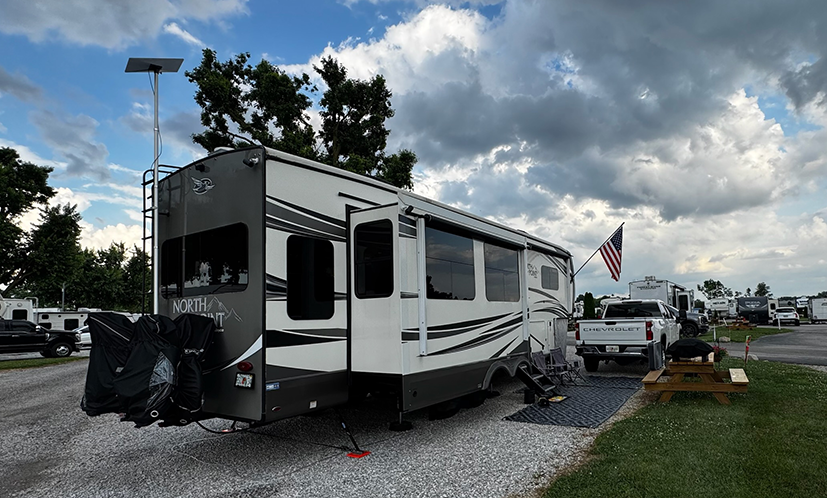
We bought our Jayco North Point from a consignment business, so the process was refreshingly straightforward. It was a used RV, the transaction was simple, and there was no pressure to add anything beyond the purchase itself.
But once the excitement settled and we started thinking about the reality of owning a used RV, a question naturally came up.
What happens if something major breaks?
If you’ve owned an RV for any amount of time, you quickly realize these rigs are more than just vehicles. They’re small homes rolling down the highway. Inside that space are slides, air conditioners, refrigerators, water systems, electrical systems, leveling systems, and more.
And like anything mechanical, things eventually wear out.
So even though no one pitched us an extended warranty at purchase, we eventually started researching them on our own. Not because we felt pressured — simply because we wanted to understand our options.
One company we came across during that research was America’s RV Warranty. On the surface, the idea made sense. Pay a set amount, have coverage for major failures, and avoid the shock of a large repair bill down the road.
It sounded reasonable.
But before making any decisions, we did what we typically do with most big decisions.
We slowed down and started reading.
Slowing Down and Reading the Details
At first glance, extended service agreements can sound very reassuring.
They promise protection from costly mechanical failures. They often talk about peace of mind. And when you’re thinking about something like an RV refrigerator, air conditioner, or slide mechanism failing, that peace of mind can sound pretty appealing.
But as we spent time going through the details on the company’s website, we started noticing something that made us pause.
The exclusions.
The coverage descriptions didn’t always feel crystal clear. In some areas the language seemed broad, while in others it was very specific about what was and wasn’t covered.
And when it comes to service contracts, those details matter.
We also spent time reading reviews from other RV owners who had used similar services. Like most things online, the feedback was mixed. But one theme showed up often enough to catch our attention: some owners mentioned delays, approval challenges, or frustration when trying to get repairs processed.
Now to be fair, every company has both happy and unhappy customers. That’s just reality.
But it did raise an important question for us.
If we’re paying for protection, how smooth is the process when we actually need to use it?
Because protection that’s difficult to access doesn’t always feel like protection.
Understanding Our Own Comfort With Risk
I’ve always been someone who is comfortable with calculated risk.
That doesn’t mean ignoring potential problems. It simply means understanding the risks, thinking through the possibilities, and preparing for them in a practical way.
So we stepped back and asked ourselves a few simple questions.
What are we really protecting against?
What kinds of failures are most likely?
And how would we handle those situations if they happened?
Since owning our RV, we’ve been fortunate. Outside of normal wear-and-tear items and routine maintenance, we haven’t experienced any major or catastrophic repairs.
Of course that doesn’t mean we never will. RVs are complex machines, and eventually something will need attention.
But when we looked at the cost of some extended service contracts and compared that to our own comfort level with risk, the numbers simply didn’t point us in that direction.
After I explained everything I had found to Vahn, we talked it through and pretty quickly landed in the same place.
For us, it just didn’t feel like the right fit.
The Used RV Factor
This conversation becomes even more common when you’re buying a used RV.
It’s easy to assume that because the RV has already had an owner, the safest move is to purchase extra protection.
And for some people, that may absolutely make sense.
But used RV service contracts can sometimes introduce additional considerations. Certain components may have limitations based on age. There can be exclusions for pre-existing conditions. In some cases, there may even be depreciation clauses that affect how repairs are covered.
None of those things are necessarily deal-breakers. They’re simply details that deserve careful attention.
For us, the gray areas were what made us pause. We weren’t looking for something that might cover an issue depending on the situation. We were hoping to see something clearer.
What Would Have Made Us Say Yes
It’s important to say this: we’re not against extended warranties or service agreements.
If we had found a plan that worked more like a solid home warranty — something with clear coverage, a straightforward deductible, and a simple process when something failed — we would have seriously considered it.
Knowing that a set deductible would reliably handle most major mechanical problems would have been compelling.
But the plans we looked into didn’t quite give us that level of clarity.
And when clarity is missing, it becomes harder to justify the cost.
The Approach We Chose Instead
Rather than purchasing a service contract, we chose a different path.
Preparation.
We understand that RV ownership comes with maintenance and occasional repairs. That’s simply part of owning something with this many systems packed into one moving home.
Instead of pre-paying a third party, we’re comfortable setting money aside and addressing issues as they arise.
That approach works for us because we’re comfortable researching problems, handling smaller repairs ourselves when possible, and planning ahead for larger ones if they happen.
But that doesn’t mean our approach is the only approach.
For some RV owners, having a service contract provides real peace of mind. Predictable payments and the feeling that someone else is helping manage major repairs can absolutely be valuable.
And there’s nothing wrong with that.
We’d Love to Hear From You
If you’ve purchased an extended RV service contract, we’d genuinely love to hear your experience.
Have you had to use it?
Was the process smooth or frustrating?
Did it meet your expectations?
Is there anything you wish you knew before purchasing one?
Who did you go with?
There’s a lot of value in shared experiences, especially in the RV community. What works for one person can help someone else make a more informed decision.
Author’s Note
This is simply our experience and how we approached the decision.
We’re not here to say extended service contracts are good or bad, or that one path is better than another. Every RV owner has a different comfort level when it comes to risk, repairs, and budgeting.
Our goal is just to share what we learned so you can make a more informed decision for yourself.
If you’re considering a plan — whether during purchase or afterward like we did — take the time to read through everything carefully, understand how it works, and decide what aligns best with your lifestyle.
For us, managing that risk ourselves felt like the right choice.
For you, it might look different — and that’s perfectly okay.

This post is part of our RV Life 101 series — a beginner-friendly guide to the essentials of RV living.
👉 See all RV Life 101 posts here