Our Favorite RV Upgrades (What Was Worth It & What Wasn’t)
Affiliate Disclaimer: Some of the links in this post are affiliate links. This means if you purchase through them, we may earn a small commission at no extra cost to you. We only recommend products we personally use and trust. Supporting us this way helps keep VNR Adventures rolling and allows us to continue sharing our journey.
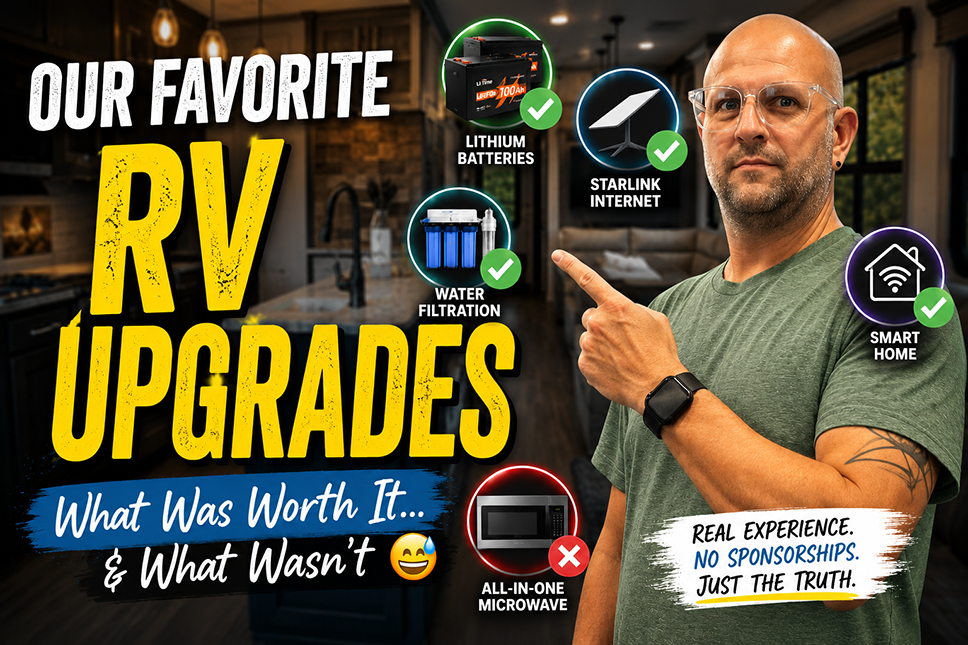
When we first purchased our 2020 Jayco North Point 310RLTS, we already knew we wanted to make changes to it.
We bought the RV about eight weeks before moving out of our house full-time, which gave us a pretty short timeline to completely transform it before hitting the road. Looking back now, we probably went a little crazy during those first couple of months. Between the remodel, upgrades, planning, downsizing, and trying to prepare for a completely different lifestyle, our garage basically turned into a full-time RV renovation workshop.
At first, most of our focus was on cosmetic upgrades and basic quality-of-life improvements. New paint, updated furniture, replacing TVs, adding a backsplash, changing out the bathroom sink and faucet, and upgrading appliances were all near the top of the list.
But after actually living in the RV full-time for over a year, our mindset around upgrades has changed quite a bit.
Now, we focus far less on “cool upgrades” and much more on upgrades that truly improve daily life, reduce stress, make things more efficient, or simply help the RV feel more like home.
Some upgrades turned out to be absolute game changers.
Others? Nice to have, but definitely not necessary.
And a few… we probably wouldn’t do again.
So here’s our honest breakdown of what was worth it, what wasn’t, and what we’ve learned along the way.
Upgrades That Were 100% Worth It
Bathroom Sink & Faucet Upgrade
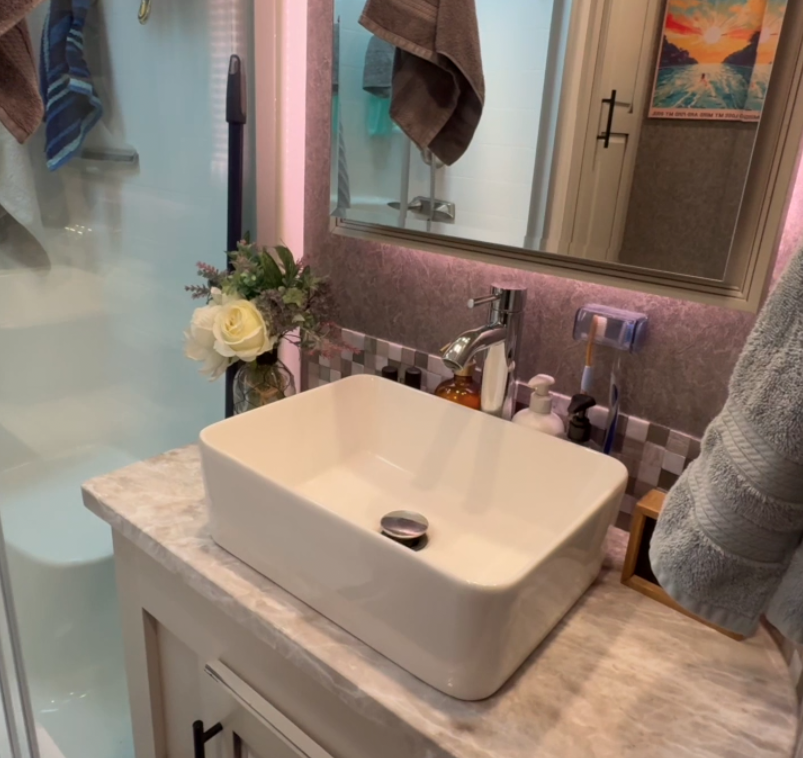
One of the very first upgrades we tackled was the bathroom sink and faucet. This was also one of the first upgrades Vahn really wanted to do immediately.
The original RV sink and faucet were tiny, and every time we used them, water ended up all over the countertop. Washing your hands or face felt awkward and messy, especially in such a small bathroom space.
It may sound like a minor upgrade, but once you live in an RV full-time, you quickly realize how much the little things matter.
Upgrading to a larger sink bowl and a more residential-style faucet completely changed the feel of the bathroom. Not only was it far more functional, but it instantly helped the RV feel less like a camper and more like an actual home.
It’s one of those upgrades we use every single day and honestly don’t even think about anymore because it simply works the way we want it to.
If you constantly find water all over your bathroom counter and have the space to upgrade, we’d absolutely recommend it.
Water Filtration & Softener System
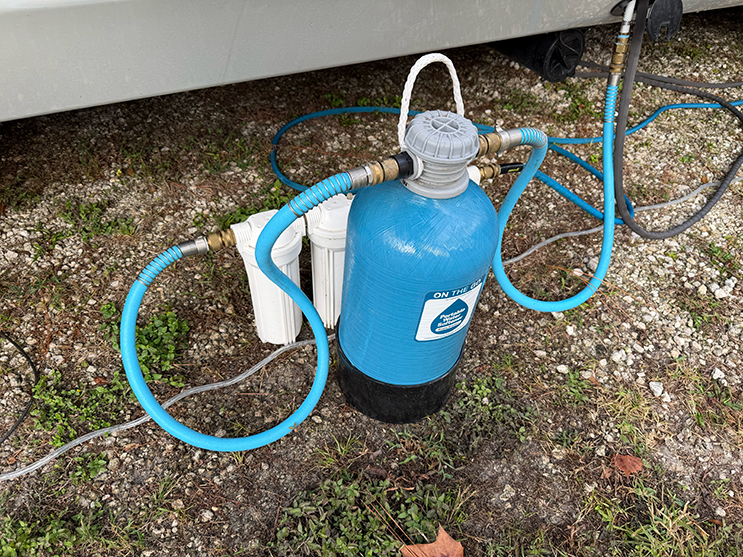
This is probably one of the most important upgrades we’ve done.
Before RV life, we never really thought much about water quality. But once you start traveling to different campgrounds all over the country, you quickly realize every campground’s water is different.
Some places have fantastic water.
Others… not so much.
We built a four-stage water filtration system paired with a water softener to help protect our plumbing, improve water quality, and reduce bottled water usage.
And honestly? We’re thankful for it every single day.
There have been campgrounds where the water quality was rough enough that even after filtration, we still chose to buy bottled water because the mineral taste was so strong. The water was technically safe, but it just didn’t taste good.
Our setup has helped tremendously with:
safer drinking water
reducing hard water buildup
protecting plumbing fixtures
improving taste
cutting down bottled water expenses
After the filtration system and softener, our refrigerator filter gives the water one final pass, and most of the time the water tastes nearly identical to bottled water.
Beyond just drinking water, it also gives us peace of mind knowing we’re helping protect the RV’s plumbing system long-term. Hard water buildup can become a real issue over time, especially when you’re moving between different regions constantly.
You definitely don’t need a system as extensive as ours, but we absolutely recommend some form of filtration and water softener setup for full-time RV living.
Smart Home & Monitoring Systems
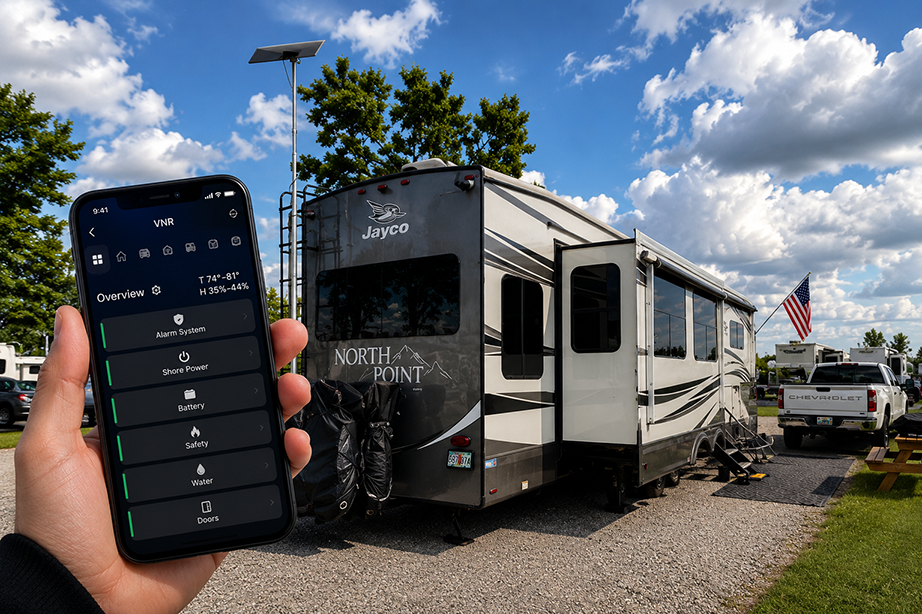
This was one of those upgrades I knew I wanted from day one.
I’ve always been into technology, networking, and smart home systems, so from the beginning I intentionally chose products that would work well together and integrate into Home Assistant.
Over time, our RV slowly evolved into a fully connected smart home on wheels.
Our RV now alerts us if:
power goes out
temperatures rise too high
doors open
motion is detected
humidity levels spike
internet disconnects
And when you have pets, that peace of mind is hard to put a price on.
Thankfully, we’ve never received a major emergency alert while away from the RV, but simply being able to quickly glance at our dashboard and confirm that power is still on and temperatures are safe reduces stress tremendously.
Especially during hot Florida summers.
When we leave the dogs behind for a few hours, being able to remotely verify that everything inside the RV is still operating properly is huge for us mentally. That level of reassurance is hard to explain until you’ve experienced it yourself.
Products like Necto have been fantastic for monitoring temperature, humidity, and shore power status remotely. Being able to leave the RV and still know everything is safe inside has easily become one of our favorite upgrades overall.
If your RV did not come equipped with a Wi-Fi enabled thermostat, I recommend looking into MICRO-AIR EasyTouch (link above).
Lithium Battery Upgrade (LiFePO4)
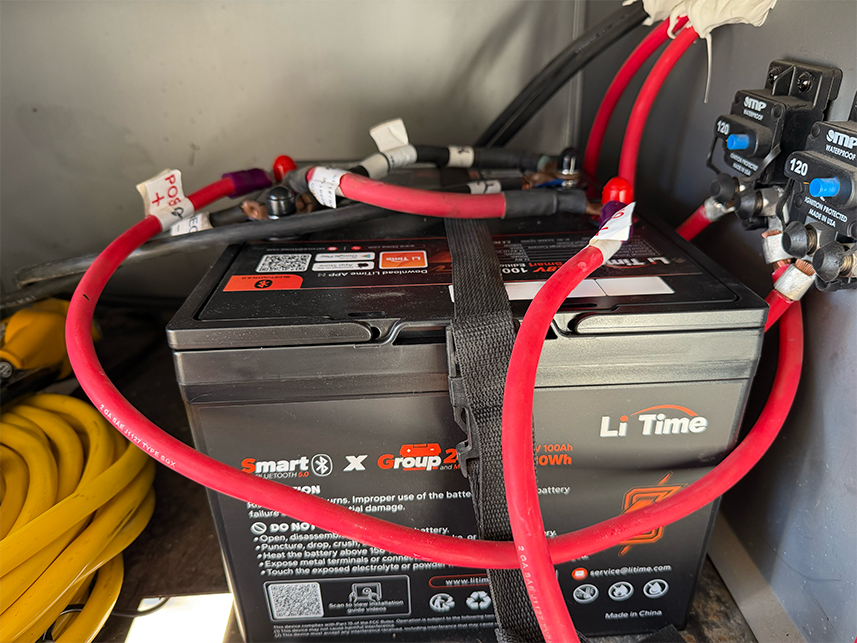
This upgrade became a necessity for us.
Our RV has a residential refrigerator, and during hot summer travel days, we constantly worried about food temperatures getting too warm while driving.
Before upgrading the batteries, we used frozen water bottles and ice packs to try helping keep everything cold during transit. We’d often try eating as much food as possible before moving days, then grocery shop again once we arrived somewhere new.
There were even a few times where freezer items partially thawed, forcing us to throw food away.
That’s when we realized something needed to change.
Before spending the summer in Florida during 2026, I told Vahn we absolutely needed to upgrade to lithium batteries to ensure our refrigerator stayed powered properly during travel days.
Since upgrading to two 100Ah LiTime LiFePO4 batteries, the difference has been huge.
Our refrigerator can now safely stay powered for roughly 18–24 hours in real-world conditions during transit, while our average travel days are usually only 2–3 hours.
The biggest improvement wasn’t convenience.
It was peace of mind.
Knowing our food stays safe while traveling completely removed a major stress point from travel days.
And honestly, it made travel days feel far less rushed too. We no longer feel pressured to hurry from campground to campground worrying about what’s happening inside the fridge.
For anyone running a residential or 12-volt refrigerator, we highly recommend making sure you have enough battery capacity to keep things powered safely during transit.
Nice But Not Necessary Upgrades
Our Internet Setup
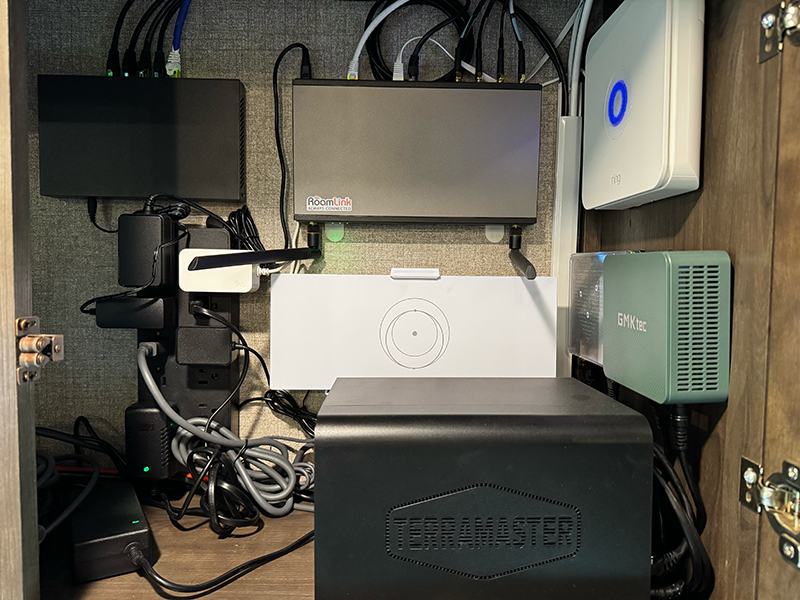
This one might be overkill for a lot of RVers, but for us it was essential because we both work remotely full-time.
Our setup includes:
Starlink Gen 3
rooftop Parsec cellular antenna
Peplink router
hardwired Cat7 throughout the RV
2.5GB switches
I researched and built the entire system all at once before installation to ensure all components worked together properly.
And honestly, redundancy has saved us multiple times.
We’ve stayed at campgrounds where:
cellular service was terrible
tree coverage blocked Starlink
one provider struggled while the other worked perfectly
Having both cellular and Starlink available has helped ensure we could continue working reliably no matter where we stayed.
There have absolutely been moments where one internet source completely saved a workday when the other failed.
For full-time remote workers, this setup has been incredible.
For weekend travelers? Probably overkill.
Many RVers could likely get away with a dedicated hotspot, Starlink alone, or a simpler router setup.
That’s one of the biggest lessons we’ve learned with RV upgrades overall: your travel style heavily determines what’s truly “worth it.”
Interior Remodel & Paint
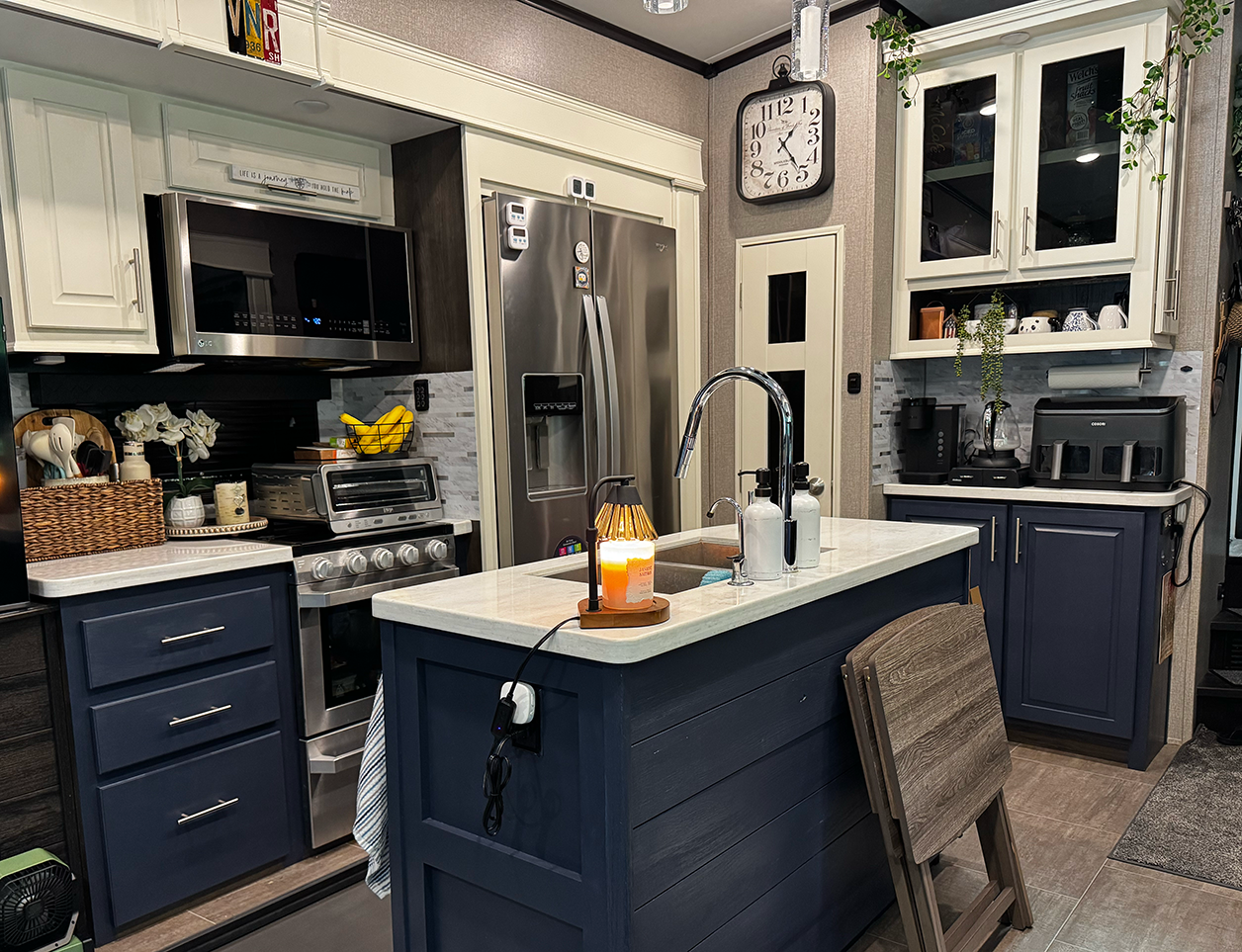
Our RV originally came with the darker wood tones that were extremely common in older RVs.
The first thing Vahn wanted to tackle was brightening everything up.
We painted most of the RV a cream white and used a beautiful ocean blue throughout the lower kitchen cabinets and island. We also removed smaller valances, mounted blackout shades directly to the wall, and added curtains to soften the space.
The transformation completely changed how the RV felt mentally.
It felt brighter.
Cleaner.
More modern.
And most importantly, more like us.
Once you begin personalizing a space, it stops feeling temporary and starts feeling like home.
That was a huge shift for us mentally. Instead of feeling like we were simply “living in an RV,” it genuinely started feeling like our home.
We’ve received a lot of positive feedback from people who walk inside now, and honestly, Vahn deserves most of the credit for the design decisions. She has the eye for design and how she wants things to look. I mostly just assist wherever needed.
Was it necessary?
No.
But it absolutely improved our quality of life and made the RV feel far more comfortable for full-time living.
Living Room TV Upgrade
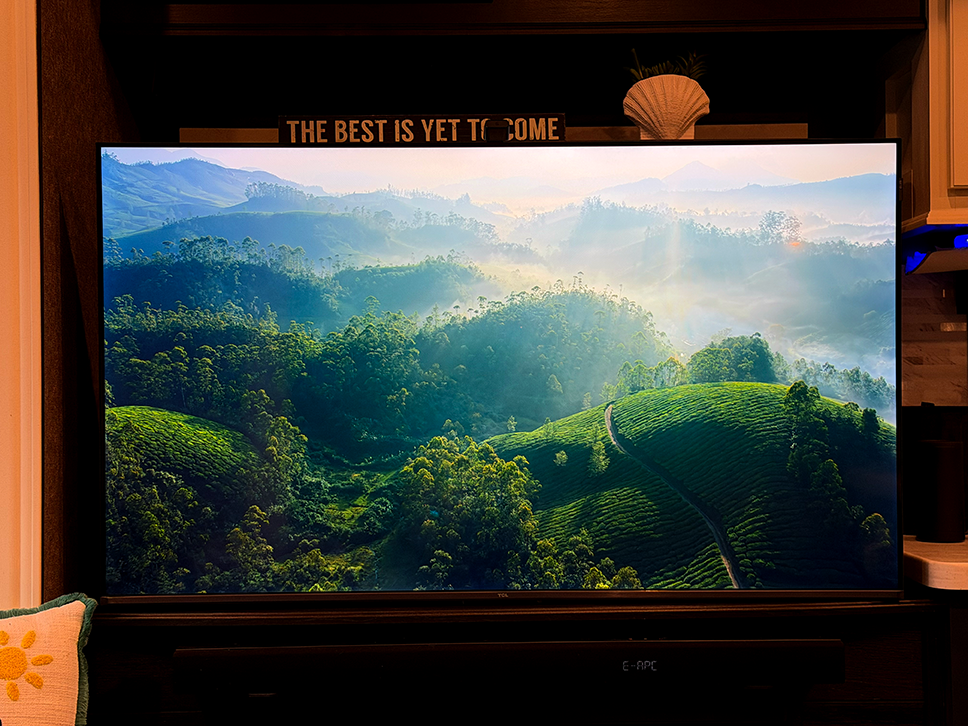
This was mostly a preference upgrade.
The RV came with a Furrion TV, but before we even started traveling, I decided I wanted something newer with better picture quality.
So we upgraded it before moving in.
Do I regret it?
No.
Would I call it necessary?
Also no.
The original TV probably would have been perfectly fine for most people.
But since we spend a lot of time inside the RV during work weeks, movie nights, rainy days, and relaxing evenings, it was one of those small upgrades that simply made the space feel more enjoyable for us.
What We Wouldn’t Do Again
The “All-In-One” Microwave
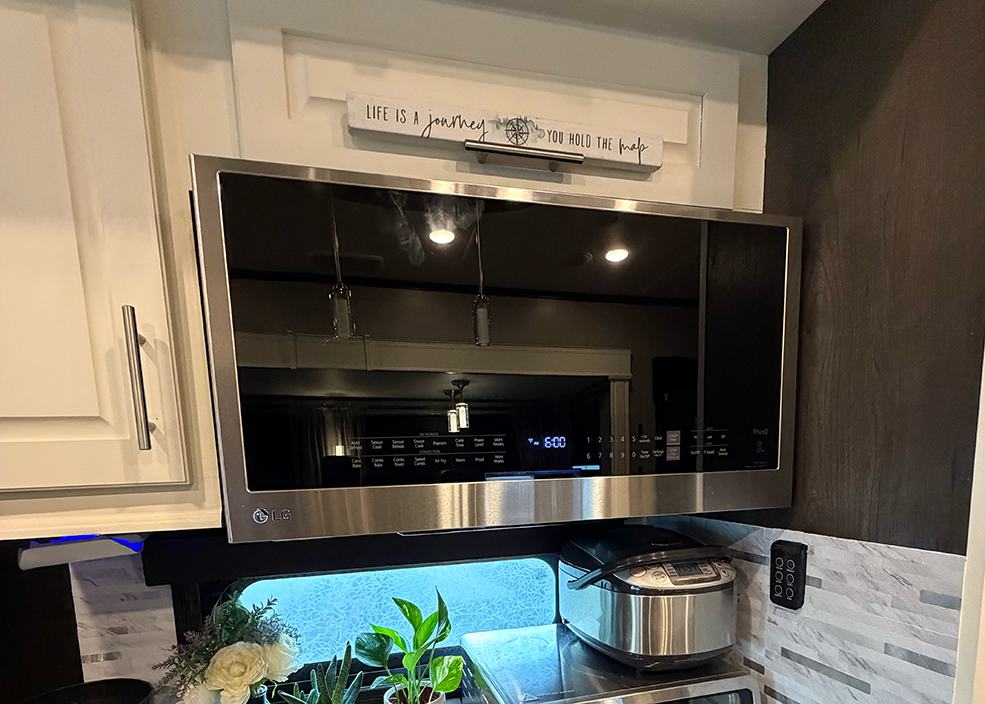
This one still frustrates us a bit.
We replaced the original microwave with an LG ThinQ Smart Over-the-Range Microwave that advertised itself as:
a microwave
an air fryer
a baking appliance
In theory, it sounded perfect for RV life where saving space matters.
Reality?
Not so much.
The “air fryer” functions were extremely limited because you couldn’t manually set temperatures or cooking times. Instead, it relied heavily on preset cooking buttons that honestly didn’t work very well.
The bake function was even more disappointing.
We tried cooking a pizza that should have taken around 20 minutes.
Forty-five minutes later… it still wasn’t done.
At the end of the day, we basically spent a lot of money on a microwave that only gets used as a microwave.
This was a good reminder that products trying to do multiple things often end up doing all of them only “okay” instead of doing one thing really well.
Sometimes simple is better.
The Upgrades We Use Every Single Day
Some upgrades quietly become part of your everyday life.
For us, these are the ones we constantly benefit from:
water filtration system
smart home monitoring
internet setup
bathroom sink upgrade
lithium batteries
None of these are flashy upgrades.
Most people walking through the RV probably wouldn’t even notice some of them.
But they consistently improve our daily life, reduce stress, and make full-time RV living easier and more enjoyable.
And honestly, those are usually the best upgrades.
Tips Before You Start Upgrading Your RV
Experience RV Life First
One thing we wish we understood better early on was how much your actual lifestyle affects what upgrades matter most.
We completed many upgrades before we ever officially lived in the RV full-time.
Now that we’ve lived this lifestyle for over a year, we have a much clearer understanding of:
what’s truly valuable
what was unnecessary
what we’d prioritize differently
Some upgrades sound amazing online but may not actually improve your daily life.
Others end up becoming things you can’t imagine living without.
Experience helps you learn that difference pretty quickly.
Prioritize Need, Safety & Security First
Our biggest advice?
Start with upgrades that:
improve safety
improve reliability
reduce stress
protect your RV
In hindsight, we probably should have upgraded to lithium batteries before ever hitting the road.
A lot of upgrades are fun.
But the ones that protect your RV, your pets, your food, or your daily comfort usually end up being the most valuable long-term.
Weekend Travelers vs Full-Timers
Your travel style matters a lot.
For example, internet needs are completely different between:
weekend campers
vacation travelers
full-time remote workers
A weekend RVer may only need internet for streaming movies or music.
Full-timers may rely on internet for:
work
smart home monitoring
video calls
content creation
security systems
The same applies to many other upgrades too.
That’s why we always recommend people spend some time understanding how they actually use their RV before going overboard with modifications.
DIY What You Can
Almost every upgrade we’ve done ourselves.
The only thing we hired out was the microwave installation because those things are heavy and awkward to install.
Outside of that, YouTube became our best friend.
There’s a tutorial for almost everything now, which makes it much easier to evaluate whether a project is something you can realistically tackle yourself.
Even if you don’t end up doing the project yourself, watching tutorials first helps you better understand what’s involved before spending the money.
Final Thoughts
At the end of the day, RV upgrades aren’t truly necessary.
But they can absolutely improve comfort, convenience, safety, and overall enjoyment of the lifestyle.
And honestly, it’s one of the things that makes RV life so fun.
You can personalize your home on wheels however you want.
Some people completely gut and redesign their RVs from scratch.
Others simply add a few upgrades that make everyday life easier.
There’s no right or wrong approach.
If we had to pick the upgrades that improved our daily lives the most, it would probably be:
our internet and smart home systems
our water filtration and softener setup
our lithium battery upgrade
And if we had to choose the upgrade that made the RV truly feel like home?
Definitely the remodel.
The paint, the colors, the personal touches, and the small residential upgrades completely changed the feeling of the space.
If we could tell our past selves one thing before starting all of this, it would simply be:
Do more research.
The more you understand your lifestyle, your travel habits, and your actual needs, the better decisions you’ll make when upgrading your RV.